eng
Puglia is a land with two faces. The first is right on the surface, always on display: it's the Puglia of the sea, the trulli, the light reflecting off the whitewashed walls of the Itria Valley, of cathedrals and castles, patron saint festivals and great food.
The other face is hidden: you have to look for it, but it rewards those willing to explore with unforgettable emotions. It's a world of caves, rock-cut churches, crypts and underground olive oil mills.
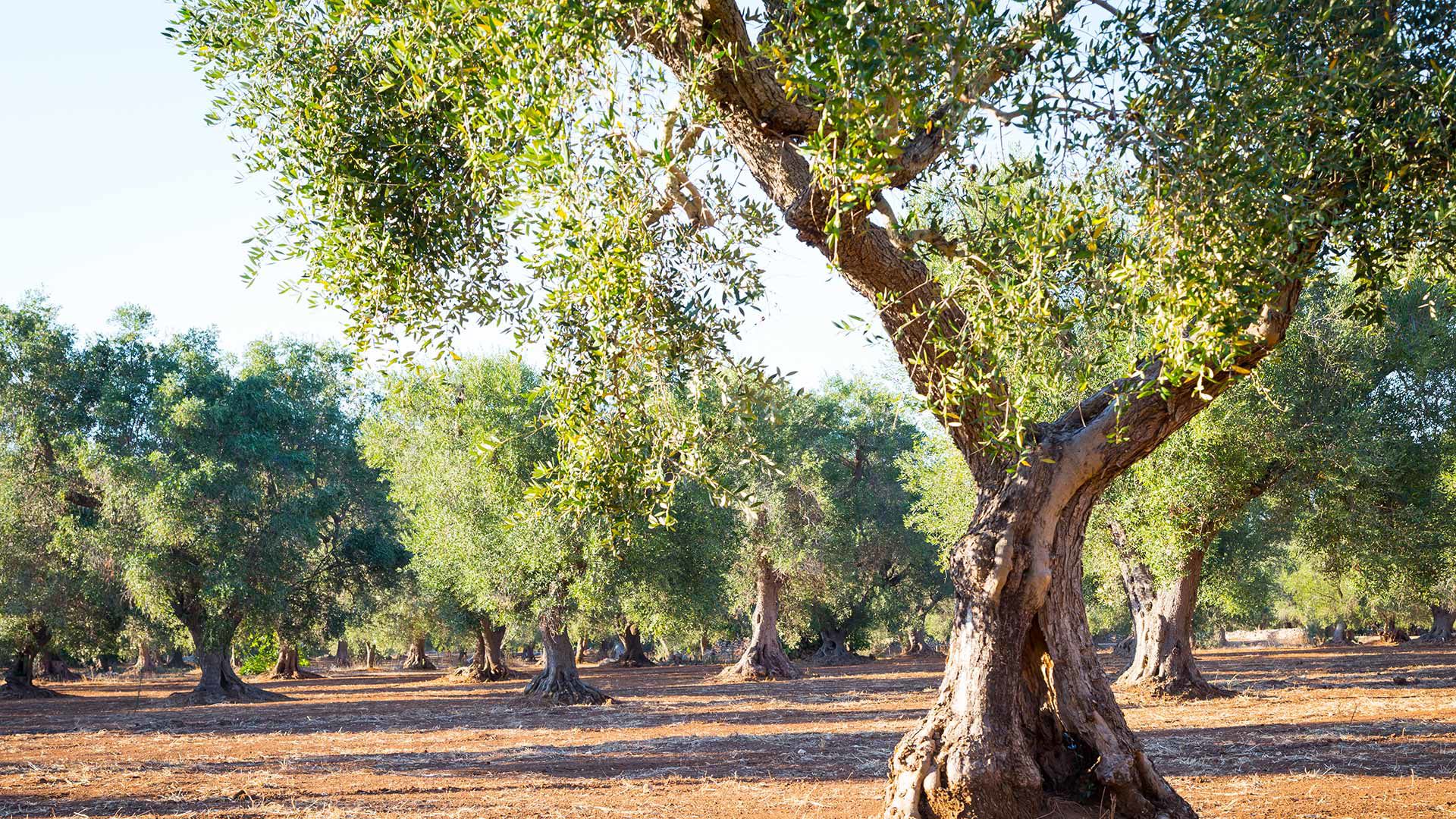
A small area of central Puglia, famous for its trulli, the distinctive dry-stone rural buildings. It spans the Murge plateau between Alberobello, Martina Franca and Ostuni, among vineyards producing white wines such as Martina Franca DOC and Locorotondo DOC, and olive groves yielding world-renowned extra virgin olive oil.
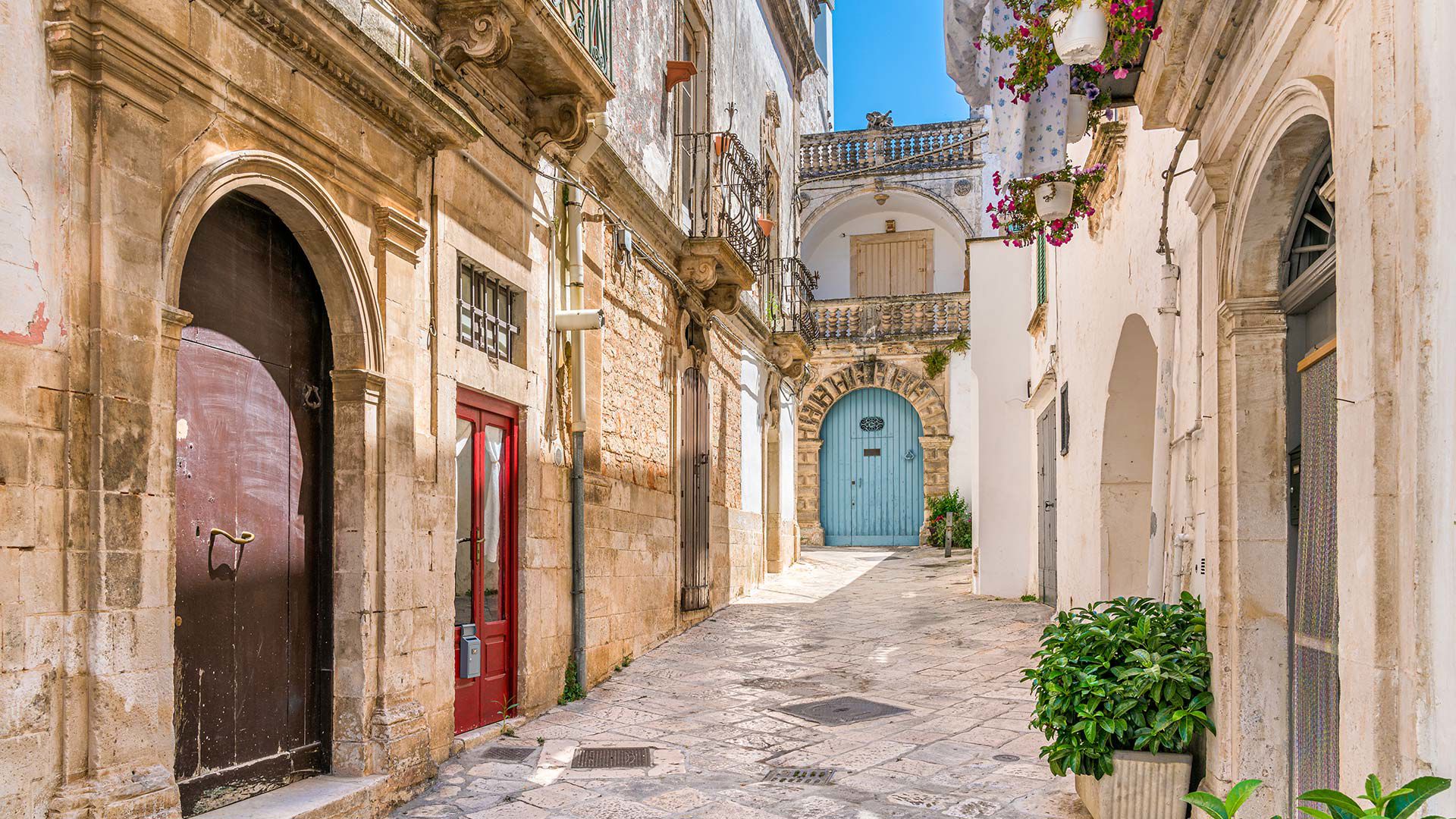
Its historic centre is among the most beautiful in Italy: strolling its streets, Baroque art reveals itself in all its splendor. Entering through the 18th-century Santo Stefano gate, you can admire the Ducal Palace, the Collegiate Church of San Martino, the Church of San Domenico and the Church of Carmine. The surrounding countryside counts over 250 historic masserie.
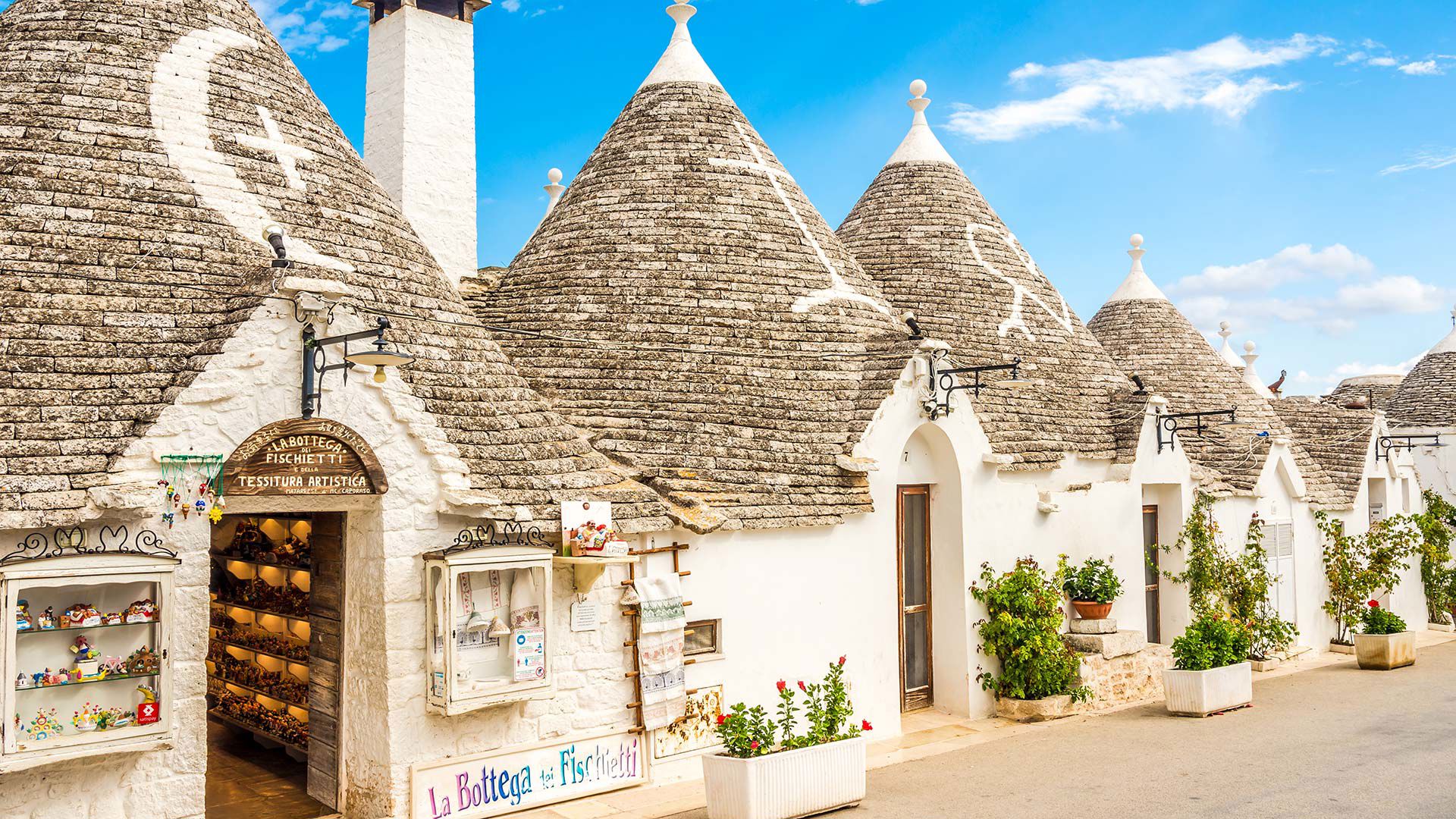
The capital of the trulli, a UNESCO World Heritage site. The monumental district is made entirely of trulli lining alleys that climb the hill. The best-known example is the two-storey Trullo Sovrano, behind the main church.
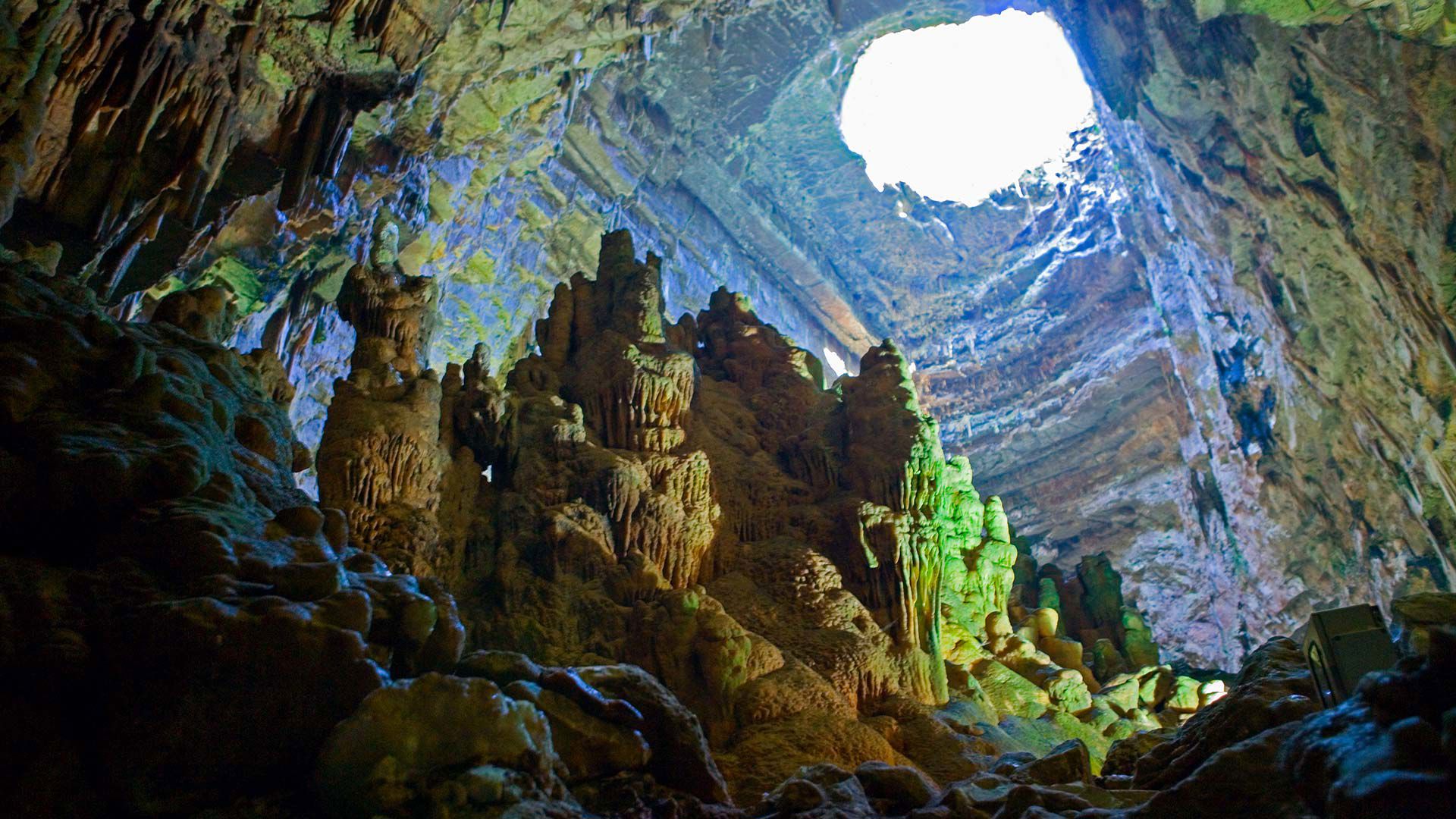
One of Italy's most important cave systems: a 3 km route reaching 70 meters in depth, through limestone formations over 90 million years old. The entrance features La Grave, the largest cavern, with the Cyclops stalagmite group at its center.
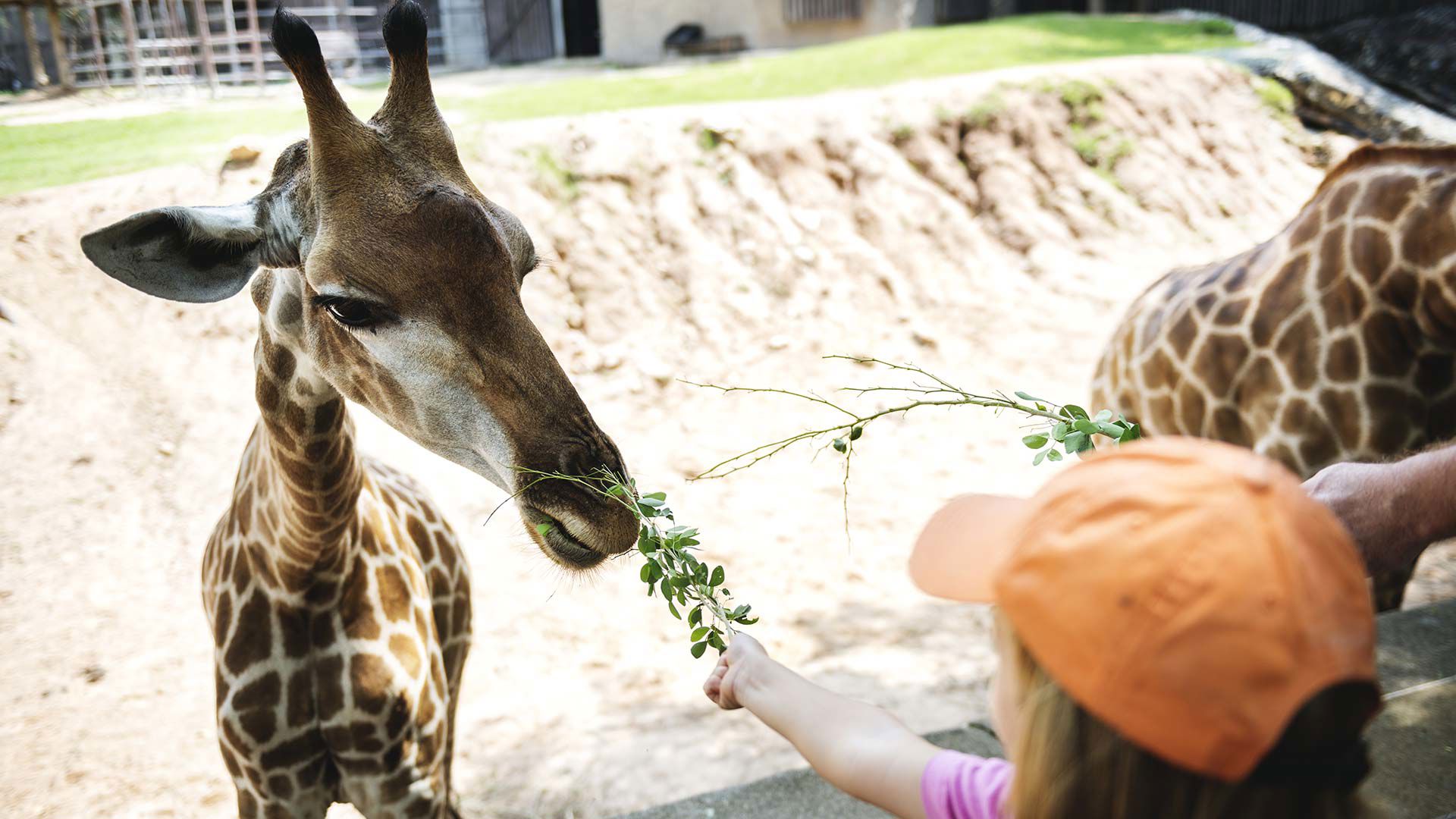
Inside the Selva di Fasano forest, this is the largest zoo of its kind in Europe: animals roam free and can be observed from your own car along guided routes.
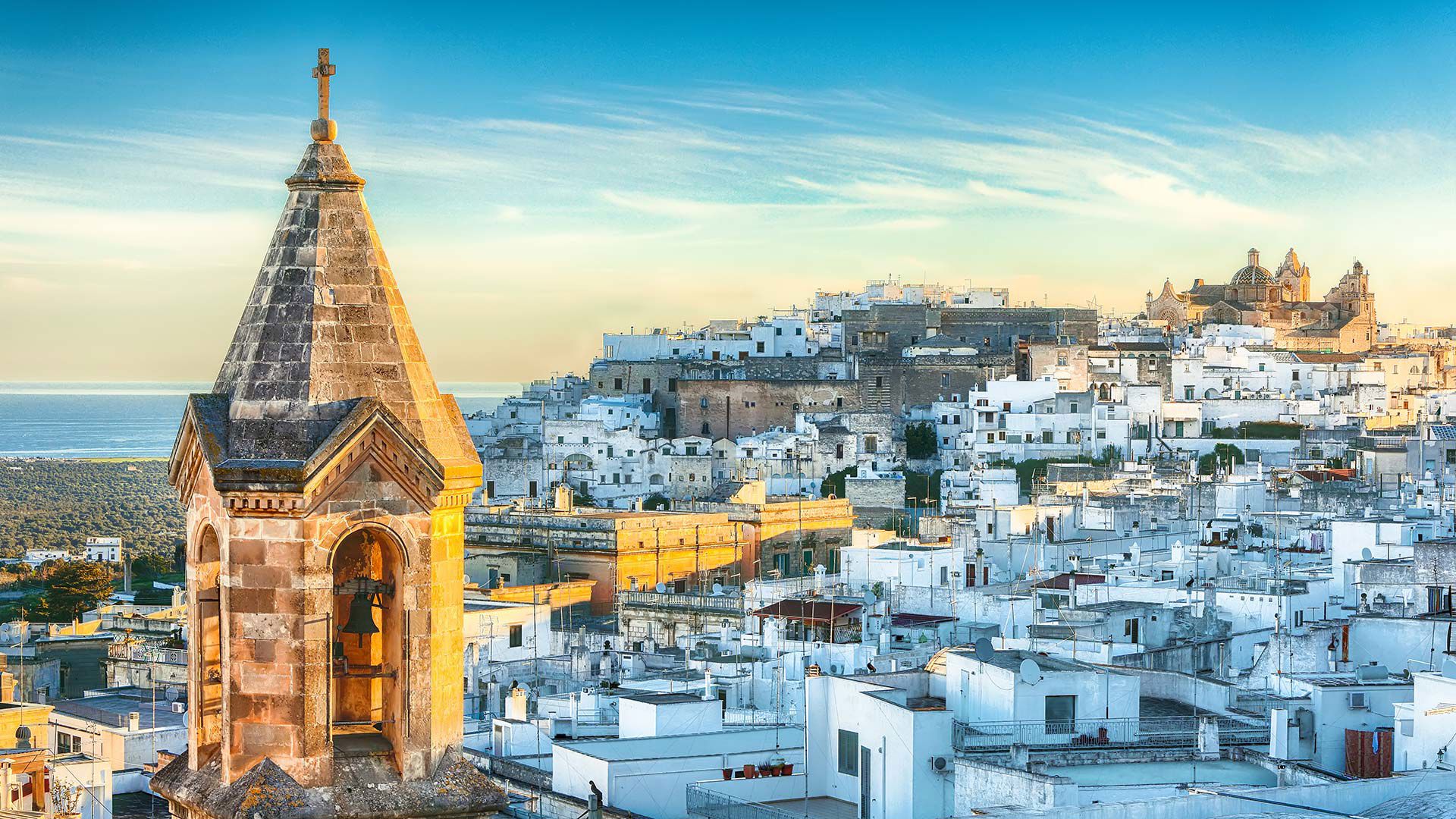
A hilltop town, entirely whitewashed, hence its nicknames "White City" and "Nativity City". At its summit stands the Cathedral, blending Romanesque, Gothic and Venetian elements. From above, the view stretches across centuries-old olive groves to the sea.
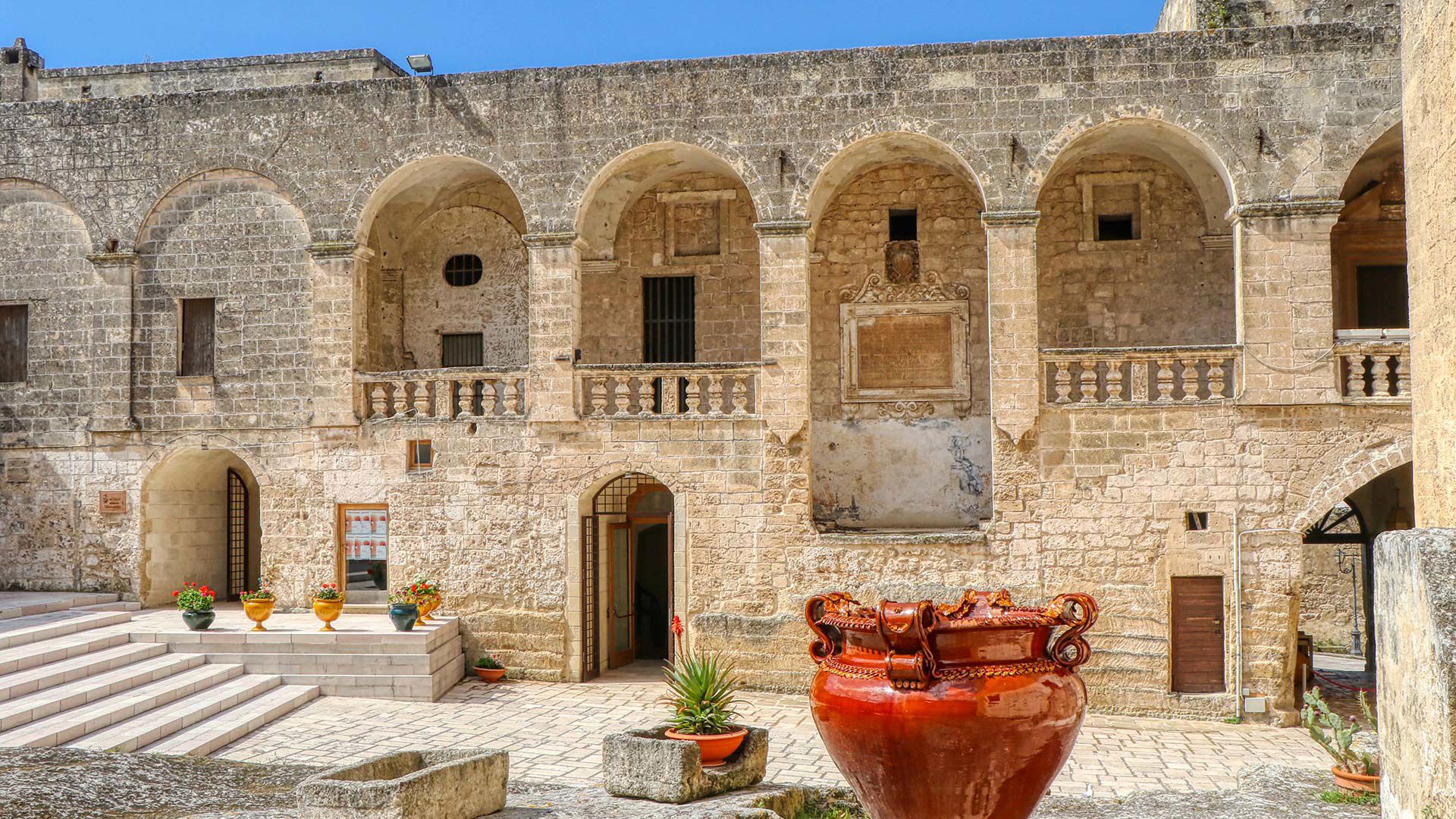
Known for its centuries-old ceramic tradition, it's the only Puglian town with a D.O.C. mark and one of Italy's 28 official pottery towns. In the Giudecca district, along the San Giorgio ravine, small artisan workshops are still active today.
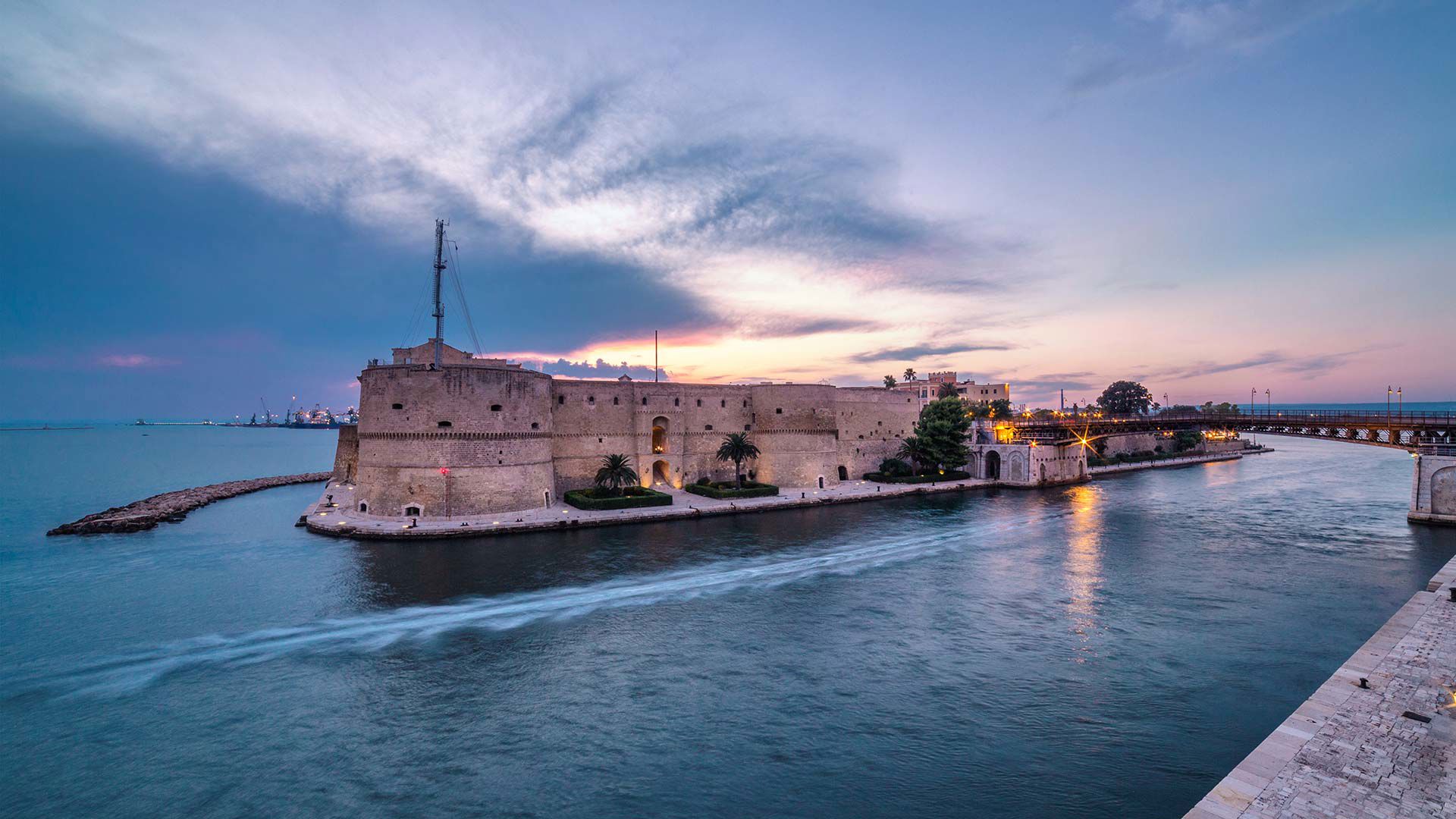
Founded by the Spartans in 706 BC, it was a colony of Magna Graecia. The MARTA National Archaeological Museum holds, alongside its famous gold artefacts, caskets, soft-stone reliefs, Attic vases and mosaics from the Hellenistic homes of this ancient Ionian city.
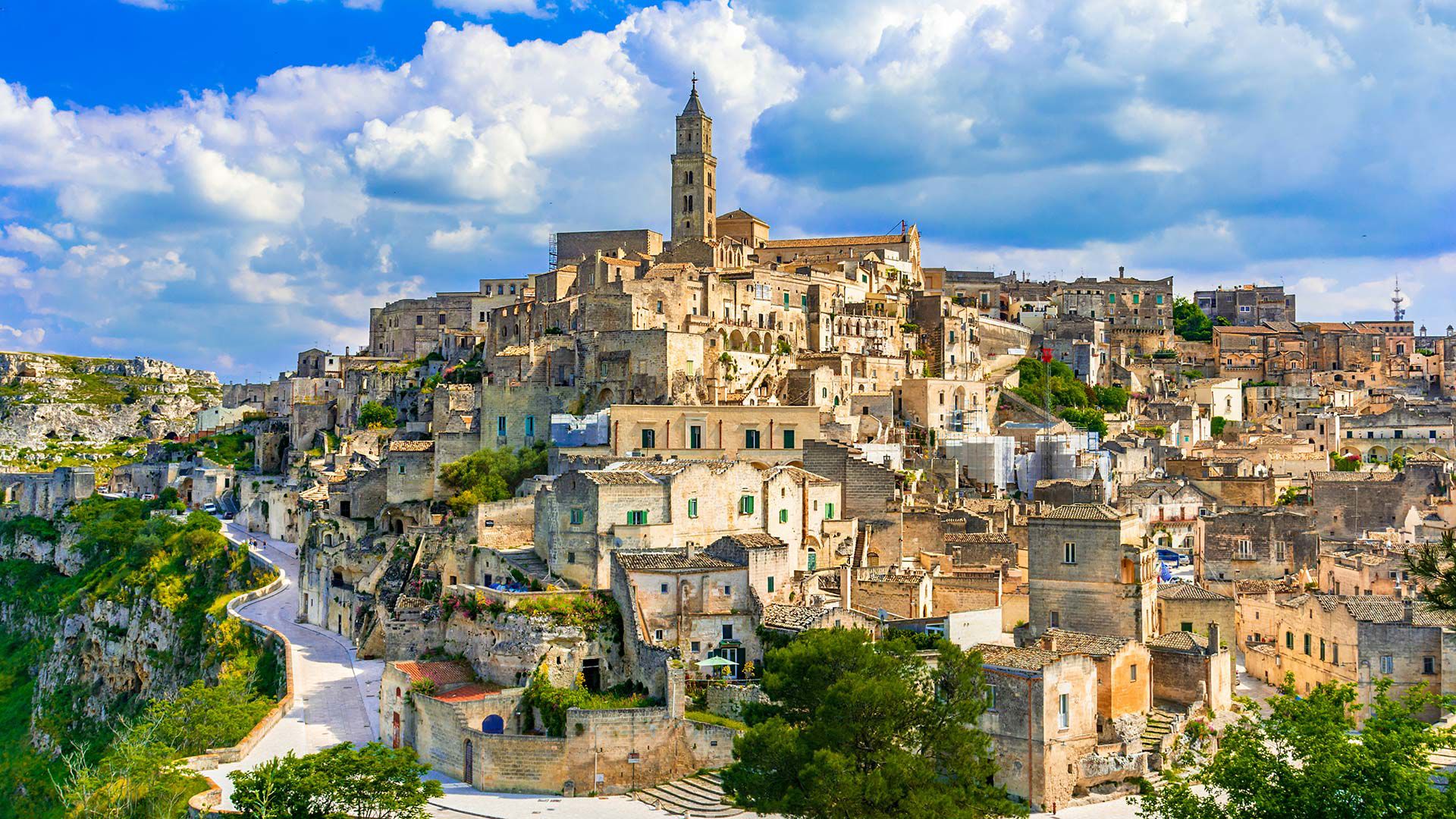
The city of the Sassi, with dwellings carved into the rock along the edge of a deep ravine: a setting of exceptional historical and natural value.
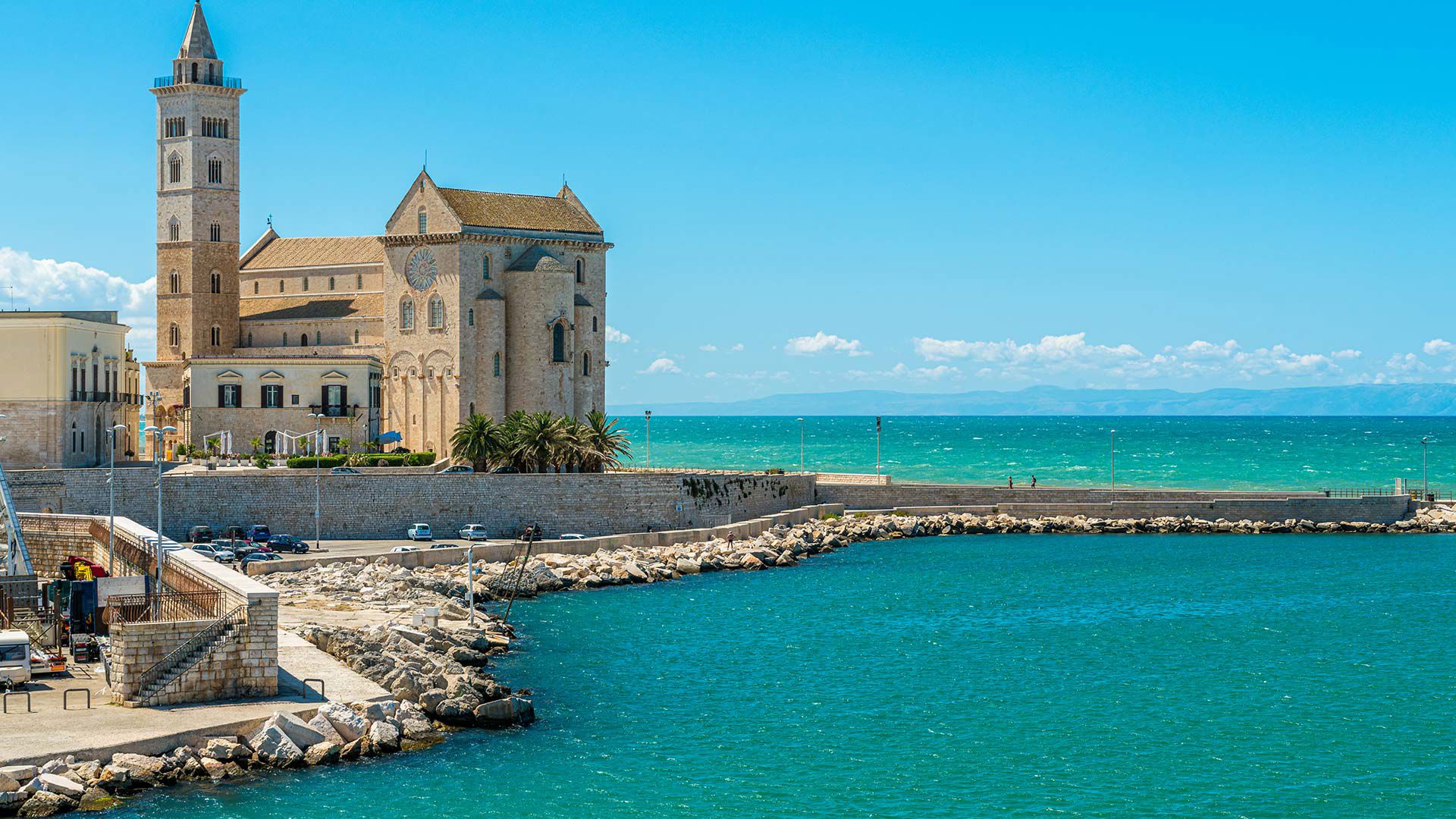
It reached its peak under Frederick II, who built its castle. The historic center preserves churches and noble palaces; its seafront cathedral is among the most striking in Italy.
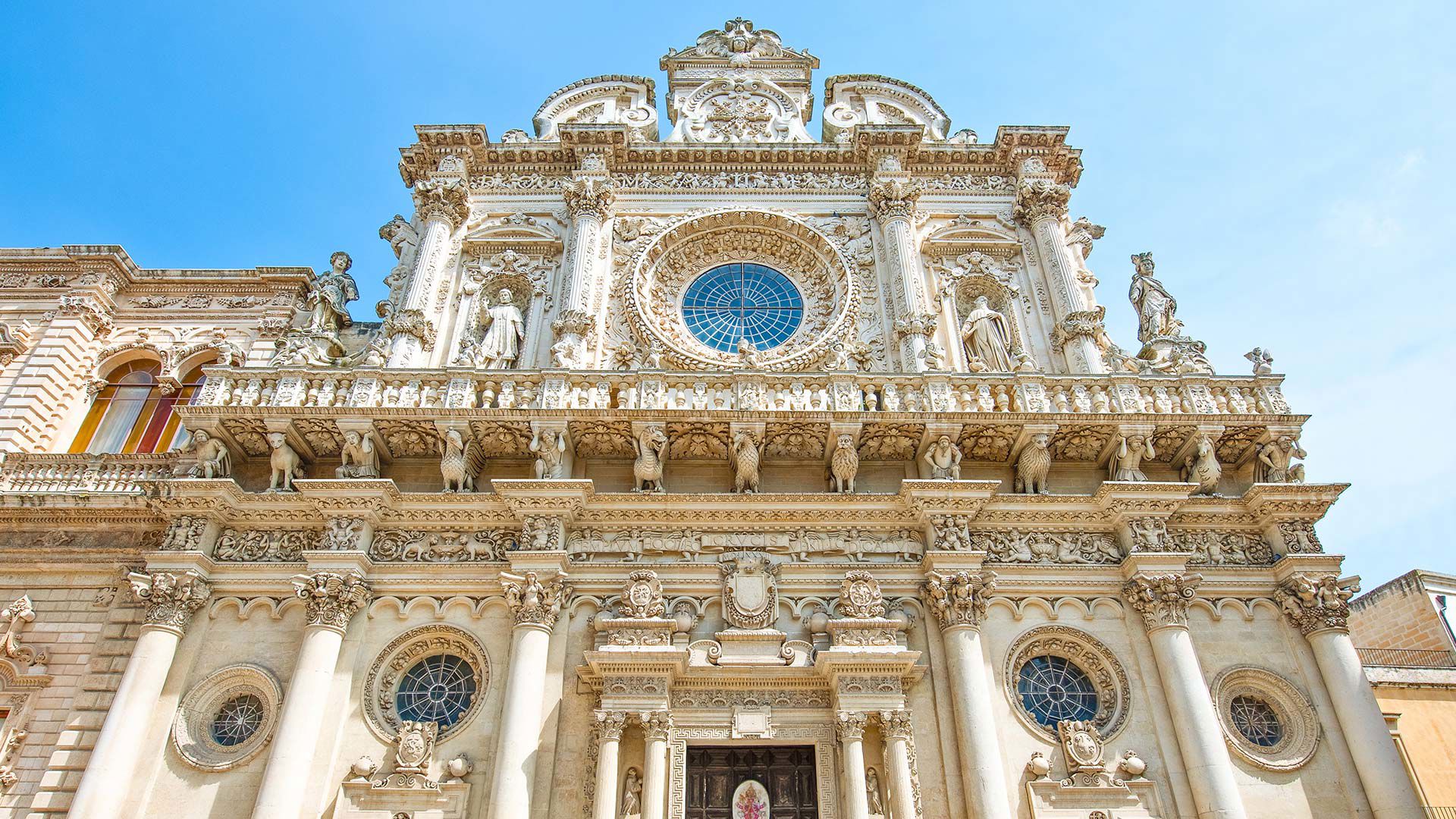
The capital of Salento, from the late 1500s it became a "little Versailles". Its Baroque style, tied to the local Lecce stone, finds its finest expression in the Basilica of Santa Croce.
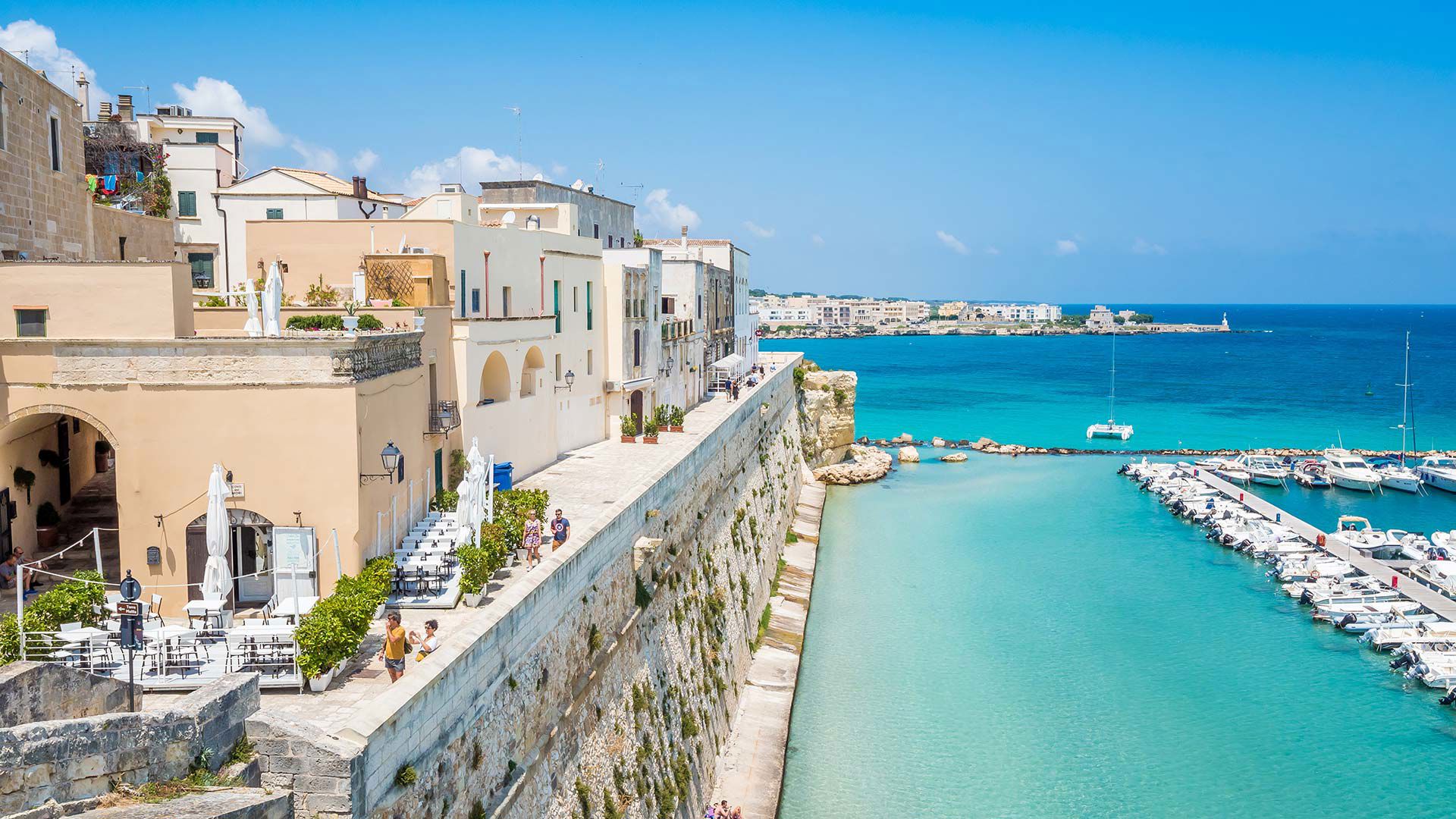
In the Middle Ages it was a key center of Byzantine rule in Italy. The Cathedral of the Annunciation preserves the memory of the 1480 siege.